Foundation Technology Construction provides expert Why did roman concrete last so long. Licensed, insured, and trusted by local customers.
About Our Why Did Roman Concrete Last So Long Services
And Your Parking Structure Won’t Make It to 50
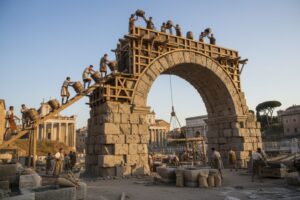
The Pantheon in Rome we build in 125 AD. Its concrete dome, the largest unreinforced concrete dome in the world, is still intact. Roman harbor structures submerged in saltwater for two millennia are not only standing, but they’re also actually stronger than when they we build.
Meanwhile, the average lifespan of modern concrete is less than 100 years. Underground parking structures? Many start showing serious deterioration in 20 to 30 years. Some don’t make it that long.
In April 2023, a parking garage in lower Manhattan collapsed without warning, killing one person and injuring seven. Investigators pointed to decades of deferred maintenance, corroded rebar, and concrete that had been slowly failing out of sight. The building had received violation notices about cracked concrete as far back as 2003—twenty years before it came down.
That structure was 66 years old. The Pantheon is 1,900 years old and still hosts tourists.
What did the Romans know that we’ve forgotten?
Chemistry Working Against Your Structure
In 2023, MIT researchers finally cracked the code on Roman concrete’s durability. The secret was a “hot mixing” process that created small calcium-rich particles throughout the material. When cracks formed and water seeped in, those particles reacted with the moisture to create new calcium carbonate crystals—essentially filling the cracks from the inside.
Roman concrete could heal itself.
Modern concrete does the opposite. When water gets in, things get worse.
Underground parking structures face a particularly brutal version of this problem. Every winter, vehicles track in de-icing salts—chlorides that concrete absorbs like a sponge. Those chlorides migrate through the concrete until they reach the embedded steel reinforcement. Then chemistry turns destructive.
Chlorides break down the passive oxide layer that normally protects rebar from corrosion. Once that barrier is gone, the steel begins to rust. And here’s the critical part: rust takes up more volume than the original steel. As the rebar corrodes, it expands—cracking the concrete from the inside out.
This is why parking structure failures are so dangerous. The damage happens invisibly, inside the concrete, until one day a chunk of the ceiling de-laminates and falls onto someone’s windshield. Or worse.
The Surfside Warning
On June 24, 2021, the Champlain Towers South condominium in Surfside, Florida, collapsed in the middle of the night. Ninety-eight people died.
The leading theory from federal investigators points to the parking garage beneath the building. Years of water infiltration had corroded the reinforcing steel in the garage’s concrete support structures. The pool deck, built on top of the garage, collapsed first—and brought the rest of the building down with it.
The issues had been documented. A 2018 engineering report noted waterproofing failures and concrete deterioration in the garage. Residents had observed standing water and crumbling concrete for years. A repair program had been approved but not yet started.
Surfside wasn’t a mystery. It was a warning that went unheeded.
What’s Happening Under Your Building Right Now
If you own or manage a building with an underground parking structure, there’s a strong chance of deterioration is already underway. The question is how far it’s progressed and whether you’re going to catch it before it becomes a crisis.
Here’s what’s working against you:
Water finds a way in. Waterproofing membranes degrade. Expansion joints fail. Cracks form from settlement, thermal cycling, and load stress. Once water has a path, it will exploit it—and bring dissolved chlorides along for the ride.
Corrosion is invisible until it isn’t. Rebar is buried inside concrete precisely, so it won’t be exposed to the elements. That also means you can’t see it corroding. By the time rust stains appear on the surface or concrete starts spalling, the damage has been progressing for years.
Freeze-thaw cycles accelerate everything. Water that infiltrates concrete expands when it freezes, widening existing cracks and creating new ones. In climates with cold winters, each season compounds the damage from the one before.
Load stress never stops. Vehicles enter and exit. Columns bear weight continuously. Slabs flex under traffic. The structure is never at rest, and every stress cycle works on whatever weaknesses exist.
Deferred maintenance compounds exponentially. A small crack that costs a few hundred dollars to seal today becomes a $50,000 concrete repair in five years and a structural emergency in ten. The math always favors early intervention, but budgets rarely do.
What Proactive Management Looks Like
The Romans didn’t build structures that lasted 2,000 years by accident. They understood their materials and designed for durability. We can’t retroactively give your parking structure self-healing concrete, but we can apply the same principle: understand the vulnerabilities and address them before they become failures.
- Inspection beyond the visual.
Surface-level walk-throughs catch obvious problems—spalling, exposed rebar, standing water. But the most dangerous deterioration is hidden. Corrosion potential mapping, ground-penetrating radar, and chloride testing can reveal what’s happening inside the concrete before it becomes visible. These diagnostics turn guesswork into data.
- Waterproofing as a system, not a product.
A parking structure’s waterproofing isn’t a single membrane—it’s a system of traffic coatings, joint sealants, drain management, and crack repairs that all need to work together. When one component fails, water pressure shifts to others. Effective waterproofing requires treating the structure as an integrated whole, not a collection of parts.
- Corrosion mitigation before it’s too late.
Once chlorides have reached the rebar, you can’t simply wash them out. But you can slow or stop the corrosion process with migrating corrosion inhibitors, cathodic protection, or electrochemical chloride extraction. These interventions buy time and extend service life—if they’re applied before structural capacity is compromised.
- Structural repair that restores capacity.
When concrete has spalled and rebar is exposed, cosmetic patching isn’t enough. The corroded steel needs to be cleaned or supplemented, the concrete needs to be properly removed and replaced, and the repaired section needs to be protected against future infiltration. Done right, structural repair can return a deteriorated element to its original load-bearing capacity.
- Maintenance as a capital strategy.
The most expensive approach to parking structure management is waiting until something fails. The least expensive—measured over the life of the structure—is a planned maintenance program that addresses small problems before they become large ones. This isn’t an operating expense to minimize; it’s a capital preservation strategy.
Our Approach to Why Did Roman Concrete Last So Long
Our Approach to Why Did Roman Concrete Last So Long
Our Approach to Why Did Roman Concrete Last So Long
Our Approach to Why Did Roman Concrete Last So Long
Our Approach to Why Did Roman Concrete Last So Long
Our Approach to Why Did Roman Concrete Last So Long
Our Approach to Why Did Roman Concrete Last So Long
Our Approach to Why Did Roman Concrete Last So Long
Our Approach to Why Did Roman Concrete Last So Long
Our Approach to Why Did Roman Concrete Last So Long
Our Approach to Why Did Roman Concrete Last So Long
Our Approach to Why Did Roman Concrete Last So Long
Our Approach to Why Did Roman Concrete Last So Long
Our Approach to Why Did Roman Concrete Last So Long
Our Approach to Why Did Roman Concrete Last So Long
Our Approach to Why Did Roman Concrete Last So Long
Our Approach to Why Did Roman Concrete Last So Long
Our Approach to Why Did Roman Concrete Last So Long
Our Approach to Why Did Roman Concrete Last So Long
Our Approach to Why Did Roman Concrete Last So Long
Our Approach to Why Did Roman Concrete Last So Long
The Cost of Waiting
Here’s the math that doesn’t show up on next quarter’s budget but determines long-term outcomes:
- A parking structure in good condition might need $2-5 per square foot annually in preventive maintenance.
- A structure with moderate deterioration might require $15–30 per square foot in restoration.
- A structure with severe deterioration—or one that’s been neglected until failure—can cost $50–100+ per square foot, often requiring partial or full replacement.
And that’s just direct construction cost. It doesn’t include business interruption, liability exposure, emergency response premiums, or the reputational damage of a publicized structural failure.
The Ann Street garage in Manhattan had been cited for concrete defects for two decades. The repairs that might have cost tens of thousands of dollars in 2003 instead became a catastrophic collapse, a death, lawsuits, demolition costs, and a citywide emergency inspection mandate that shuttered dozens of other garages.
Deferred maintenance always gets paid. The only question is when, and at what multiple.
What the Romans Got Right
MIT’s research found that Roman builders didn’t fully understand the chemistry that made their concrete self-healing. They discovered the technique through centuries of trial and error, observing what worked and refining their methods.
But here’s what they did understand: structures interact with their environment over time, and the smart approach is to design for that interaction rather than pretend it won’t happen.
Modern parking structures aren’t going to heal themselves. Water will infiltrate. Chlorides will migrate. Steel will corrode. Concrete will crack.
The question is whether you’re going to manage that process proactively—with inspections, waterproofing, corrosion mitigation, and timely repairs—or reactively, when a ceiling collapses or an engineer condemns the structure.
The Romans built for millennia. We’re not asking for that. We’re asking for parking structures that make it to their design life without becoming liabilities.
That’s not an engineering mystery. It’s a management decision.
Is your underground parking structure due for an inspection? Foundation Tech, Inc. specializes in concrete rehabilitation, waterproofing, and corrosion repair for commercial structures across California, Nevada, Arizona, and the western states. If you’re seeing warning signs—or just want to know what’s happening inside your concrete—reach out. We’d rather help you prevent problems than repair emergencies.
Learn more at www.foundationtechinc.com or call 661-294-1313.
Foundation Technology Construction — Home
For industry standards and best practices, visit the Better Business Bureau.